Easter
A flower
Spring
Tulips
Egg
Rabbit
Monday, April 8, 2013

Tuesday, March 26, 2013
Desert Animals
Tortoise
Tortoises are a family of land-dwelling reptiles in the order Testudines. Like their marine relatives, the sea turtles, tortoises are shielded from predators by a shell.

Greater Roadrunner
The Greater Roadrunner, taxonomically classified as Geococcyx californianus, meaning "Californian Earth-cuckoo," is a long-legged bird in the cuckoo family, Cuculidae.

Coyote

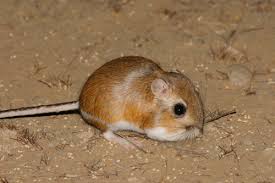
Kangaroo rat
Kangaroo rats, genus Dipodomys, are small rodents native to North America. The common name derives from their bipedal form: as they hop in a manner similar to the much larger kangaroo, although they are not related.
Sandgrouse
Sandgrouse is the common name for Pteroclididae, a family of sixteen species of bird, members of the order Pteroclidiformes. They are traditionally placed in two genera.

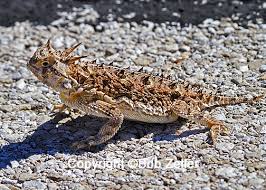
Horned lizard
Horned lizards are a genus of lizards which are the type genus of the family Phrynosomatidae. The horned lizard is popularly called a "horned toad", "horny toad", or "horned frog", but it is neither a toad nor a frog.
Tortoises are a family of land-dwelling reptiles in the order Testudines. Like their marine relatives, the sea turtles, tortoises are shielded from predators by a shell.

Greater Roadrunner
The Greater Roadrunner, taxonomically classified as Geococcyx californianus, meaning "Californian Earth-cuckoo," is a long-legged bird in the cuckoo family, Cuculidae.

Coyote
The coyote, also known as the American jackal, brush wolf, or the
prairie wolf, is a species of canine found throughout North and Central
America, ranging from Panama in the south, north through Mexico, the
United States, and Canada.

Kangaroo rat
Kangaroo rats, genus Dipodomys, are small rodents native to North America. The common name derives from their bipedal form: as they hop in a manner similar to the much larger kangaroo, although they are not related.

Sandgrouse
Sandgrouse is the common name for Pteroclididae, a family of sixteen species of bird, members of the order Pteroclidiformes. They are traditionally placed in two genera.

Horned lizard
Horned lizards are a genus of lizards which are the type genus of the family Phrynosomatidae. The horned lizard is popularly called a "horned toad", "horny toad", or "horned frog", but it is neither a toad nor a frog.

Monday, March 25, 2013
Oysters
Bivalves are marine animals. They have two shells,
one on the top and one on the bottom. Oysters are
the most valuable of all Bivalves. They are common
in shallow and warmer waters all over the world.
Female Oysters produce five to fifty-thousand eggs
in one year, but few will mature. Their shell forms
a couple of days after fertilization. Oysters will
start swimming a few days after they hatch. After
swimming a few days, Oysters will attach to a rock
or a submerged object, where they will live for the
remains of their lives. Once full grown, they are
two to ten inches long.
Friday, March 22, 2013
Desert Tarantula
The Desert Tarantula is the largest spider in the world.
They are portrayed in movies as dangerous, but are not
really dangerous to humans. The Desert Tarantula
spends most of their lives underground in burrows.
They eat by sitting at the entrance of their burrows
at night and wait for insects or small animals to wander
to close. The Desert Tarantulas are most often seen
when mating , because they come out of their burrows
looking for adult females. Males live to be ten to
eleven years old. Females live to be twenty-five
years old and older. The females lay eggs several
times during their lives.
Thursday, March 21, 2013
The Boy and The Nuts
A young boy who saw a pitcher full of nuts reached
in to get some. He greedily grabbed the nuts then
tried to pull his hand out. His fist was bulging with
nuts so he couldn't get it out. Unwilling to let go
of the nuts, he was unable to get his hand out. He
burst into tears. Then a man nearby said "If you
would be satisfied with fewer nuts you could get
your hand out." The moral is sometimes you have
to give a little to get what you want.
Wednesday, March 20, 2013
Sea Snakes
Sea Snakes are the most venomous snakes in the
world. Scientists think the Sea Snakes venom is fifty
times more powerful than the King Cobras. Sea
Snakes don't always inject venom when they bite,
Nobody really knows why. Its venom has slow effect
but is fatal twenty-five percent of the time. Fisherman
are most likely to become victims either by stepping
on or handling them carelessly.
Tuesday, March 19, 2013
Pearls
Oysters are useful for food and the production of
pearls they give. Pearls begin to form by a parasite
or a grain of sand getting into the mantle of the oyster.
Its presence causes an irritation for the oyster.
The oyster secretes its mother-of-pearl-forming-substance
around the object which stops the irritation. Over
time many layers of the substance are made and
the pearl is formed. The Japanese discovered a way
to encourage the oysters to make pearls artificially.
It takes three to four years for a pearl to form.
Subscribe to:
Posts (Atom)